Thinkific

➔
★★★★★ 4.8 / 5
Thinkific’s combined course development and marketing platform can help aspiring information marketers quickly get going with selling their content online. It is the most straightforward platform we have tested for getting a complete content and marketing system launched. Its 30-day free trial gives you full access to build — and even start selling — your first course before you pay anything. While the built-in functionality may not have everything you need for expanding into a more extensive operation, it has solid integrations giving you access to a wide range of features both for the content and marketing aspects. Following our first review of the platform, overall improvements and the removal of transaction fees from all plans make us recommend Thinkific for those looking for an integrated platform for their online courses.
Pros
- Good balance between ease-of-use and advanced functionality
- Straightforward community feature
- Unlimited number of students, regardless of tier
- A 30-day free trial, no credit card required, so you can build and market your first course before paying.
- You can get paid via Stripe and PayPal, even at the lowest tier
- Possible to expand course and marketing functionality via various third-party integrations
- No added transaction fees (above the ones charged by processors)
Cons
- No mobile app (but mobile-responsive course player)
- Limited onboarding and training for non-premier level package subscribers
- Lacking in accessibility features
30-day free trial to test out the platform
Creating an online course is no easy feat.
You spend long, hard hours distilling your expert knowledge down to a few course lessons that you hope will connect with—and make sense to—your students. You break your hard-earned expertise into “chunks,” ideate worksheets and activities to pair with your lessons to drive your most important ideas home, and then do your best to get your content out there for the world to see, digest, and hopefully, love.
Since you’ve got your hands full, you probably don’t want to spend too much of your precious time and energy mastering a complicated new platform to display your awesome course.
This is where Thinkific comes in. And this is where Thinkific shines. Thinkific’s no-fuss online teaching platform can quickly fulfill the needs of even the most ambitious online course creator. Like other all-in-one course creation, administration, and marketing platforms (like Teachable, LearnWorlds, and LearnDash), it combines everything you need to get your online course business started and running, but it does a better job than others, focusing on the essentials while providing solid integrations with external services for when you need them. There is no need to change the platform when growing, as shown, for example, by CFI and their more than 1 million learners, which, combined with an unlimited number of students allowed in all of their tiers, makes for a very good value proposition.
Importantly, they offer a 30-day free trial that gives you everything you need for creating and marketing your first course (and they don’t even require a credit card or charge any transaction fees on your sales on this tier), so we recommend anyone who’s considering creating an online course to give it a try.
To give you a deeper understanding of what’s out there and how Thinkific stacks up against other online course software systems, we took the platform for a test spin for the first time in 2020 and revisited it in 2023 to keep up with the updates they’ve introduced. Keep reading to uncover our comprehensive—and honest—Thinkific review.

What is Thinkific?
Thinkific is a cloud-based course creation and learning management system (or LMS) that lets users create, market, and sell online courses. The platform combines all the tools you need to get started to sell courses (or provide them for free), educate your customers, and earn revenue, all while growing your brand and engaging your audience – defining itself as “everything you need to run your education business under one roof.”
This all-in-one approach sets the platform apart from, on the one hand, platforms like iSpring Suite and Adobe Captivate that are only for creating courses, and on the other, learning management systems like Moodle that are primarily built for managing courses rather than creating them. It is also not an open course platform like Udemy where authors can publish their courses. Instead, it falls into the category of integrated course creation and marketing platforms, like Teachable and Kajabi.
Compared to other integrated online course platforms, Thinkific really focuses on one important and distinctive feature: course creation. While you can also use the platform to keep in touch with customers through email marketing, conduct sales and optimize your sales funnel, and keep your data secure, Thinkific’s offerings in these secondary realms are less significant.
Thinkific hosts the courses on their servers so that you don’t have to. This means that you still have 100% control over your actual business website and how it looks but can make your courses more quickly and easily thanks to its drag-and-drop course builder. It’s perfect for fast design.
How does Thinkific Work?
Thinkific hosts digital content created by entrepreneurs around the world. These entrepreneurs, often called “teachers” or “creators,” then sell access to their online courses freely and widely.
Thinkific serves as the go-to learning platform that students use to access all of the courses they purchase. This means that while a course can be fully branded with a specific business, organization, or individual, the learning itself actually happens on the Thinkific platform, rather than on their host entity’s own website.
Thinkific courses span the gamut. Digital entrepreneurs, from Spanish teachers and yoga instructors, to smartphone marketers and more, have all called the Thinkific platform “home” as they work to scale their businesses and audiences. More than 25,000 teachers or course creators use Thinkific. The platform has hosted thousands of courses for millions of students around the world. That’s a lot of personal development!
Some good examples of courses created on Thinkific include:
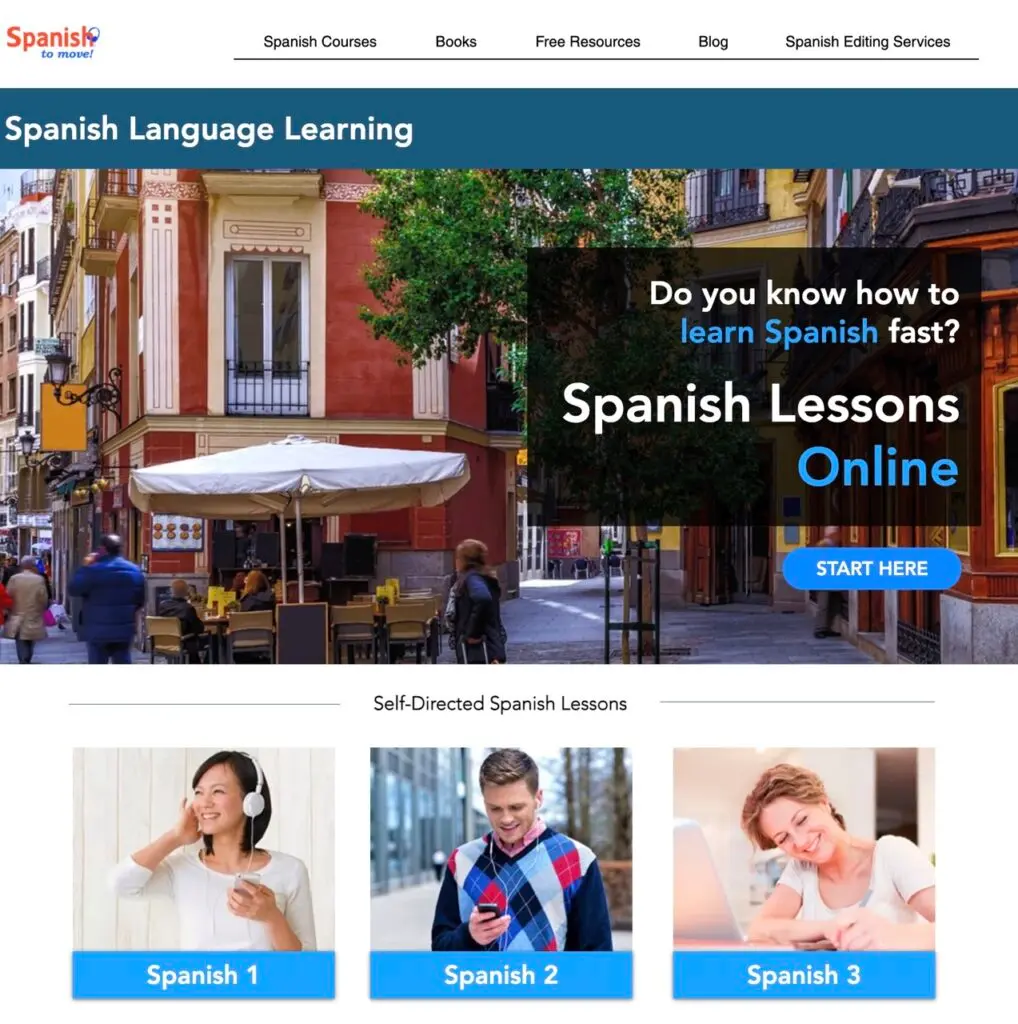
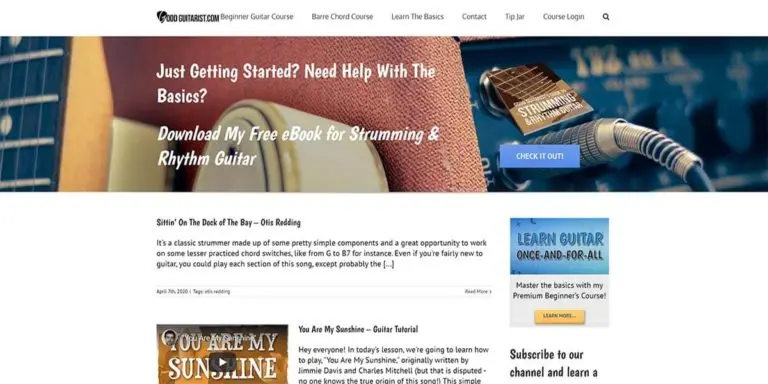

Anyone who dreams of building online courses can sign up quickly and easily at
to tinker around with their easy-to-use builder tools. You will be surprised at how easy it is to create beautiful Thinkific landing pages! From the backend, you can manage and construct your content, design your landing page, and market and sell your course. You can even access analytics thanks to its beta reporting features. And of course, you can support your students easily within the platform, which makes it a great all-in-one solution for those just getting started.
How Much does Thinkific Cost?
Before you run to sign up for your very own Thinkific account, it’s important to know what access to the platform is going to cost you. Thinkific has overhauled its pricing more than once in recent years; the current lineup runs from $54 to $219 monthly (roughly 25% cheaper on annual billing), with a custom-priced Plus tier above that, and the old free plan has been replaced by a 30-day free trial. Although we would recommend everyone to simply start out with the 30-day free trial, as it’s the best way to get to know the platform (and has all the features included that many course creators need), let’s examine what’s included in the different Thinkific packages:
- Tier 1: Basic ($54 / month, $480 annually)
- Tier 2: Start ($109 / month, $984 annually)
- Tier 3: Grow ($219 / month, $1,968 annually)
- Tier 4: Plus (custom pricing)
Tier 1: Basic ($54 / month, $480 annually)
Thinkific wins the low-cost war with other learning management systems because of its 30-day free trial and inexpensive Basic tier. Don’t confuse cheap with poor value, either. The trial lets you test-drive Thinkific’s core feature set and create and market your first course – which will be enough for quite a few course creators with more limited ambitions. This package includes a slew of capabilities, like:
- Easy drag-and-drop course creation, with unlimited courses
- E-commerce functionality to sell your course with no additional transaction fees
- Unlimited students (!)
- Easy website builder to host your course
- Access to the Thinkific app store with external integrations
- Access to “Foundation” level courses from Thinkific Academy
- Support via email and chatbot
Use all of the above to build your first course and sell it to an unlimited number of students. You can freely add resources like quizzes and surveys to your courses, instantly access any funds that you earn, and enjoy content hosting for all of your video, audio, and PDF files.
Basic is one of the cheapest entry points among serious course platforms: $54 a month (or $40 a month billed annually) gets you unlimited courses, all the core functionality, and unlimited students. And thanks to the 30-day free trial, you can try everything before committing. Start the free trial and take your time creating your first course – they don’t even ask for your credit card details.
Tier 2: Start ($109 / month, $984 annually)
Start – the second tier of Thinkific’s platform – will set you back $109 monthly (or $984 annually with about 25% discount) but includes all of the features mentioned in the Basic tier, plus useful marketing add-ons like affiliate programs, coupons, and custom domains so you can build your own brand (note that for this tier, there is still some Thinkific branding on your website).
On the content side, the most important feature is that you can have an unlimited number of courses – but you can only have one community in this tier, so if you are relying on the community in your business model, you would likely want to keep your courses on related topics. Another important feature for this tier is the possibility to include live lessons in your courses. You also get access to more advanced course- and website-building options, assignments, and more advanced payment options including memberships and payment plans. You can also get support via live chat in this tier, and get access to the “Advanced” level Thinkific Academy courses.
Tier 3: Grow ($219 / month, $1,968 annually)
While Thinkific’s third-tier membership, the Grow plan, costs a fair amount at $219 per month (or $1,968 if paying annually), most course creators would not need to upgrade to this level before they already have considerable income from their courses (or are otherwise bringing value to your business if you are not charging for your courses).
On the marketing side, you can remove all Thinkific branding at this tier, which can make a big difference in how professional your site comes across. It also adds the possibility of bulk mailings to students, critical for both larger-scale course administration and marketing, as well as bulk enrollments of students.
While the list of additional features for this plan is not that long, they are all important ones. With a wider set of courses, you are likely to need additional communities – this plan allows you to have three instead of one. As you will likely have progressed from doing everything yourself at this stage, the addition of a second site administrator, together with five course administrators, is also welcome.
Another feature, which will be critical to some, is that you will have access to the Thinkific API, which expands the integrations that are possible, and enables you to develop custom integrations if needed.
If you prefer phone support, this is also provided with the Grow tier.
Tier 4: Plus (custom pricing)
The Plus plan is perfect for more “advanced” customers who are trying to deliver online education at scale. This includes the possibility to host up to ten communities alongside your courses and provides five site administrator accounts and 15 course administrator accounts. With custom SSL certificates, you have the option to provide an even more trust-inspiring environment for potential students considering making a purchase. This tier also gives you access to priority phone support. These features do come at an added cost — Thinkific no longer publishes pricing for its top tier (now sold as “Plus”), so you’ll need a custom quote from their sales team. It is not the level for most to start out at – you get almost all important features already with the Grow plan, but may need to upgrade to this plan to accommodate a growing online course business.
More Money Matters
- A credit card is NOT required. To start the free trial, you only need your name and email address, and you’ll be good to go.
- Annual discount. Save 25% off your bill if you decide to pay for your subscription annually rather than monthly.
- You can always cancel, upgrade, or downgrade your account. There are no long-term contracts on the month-to-month plans. This provides a lot of flexibility.
- Transaction fees. Can’t live with ’em, can’t live without ’em (though wouldn’t we like to try). If you are using the built-in Thinkific payments or the Stripe integration, expect to pay the typical payment processor fee: 2.9% + $0.30 for each successful transaction (this will vary depending on your location and which country the credit card is from). However, unlike many other platforms, Thinkific does not charge you any additional fees for your sales.
Advantages (Pros) of Thinkific
What are the pros of Thinkific? There are many to choose from, but we think the biggest perks of Thinkific are:
- Good balance between ease-of-use and advanced functionality
- A 30-day free trial, no credit card required
- You can get paid via Stripe and Paypal, even at the lowest tier level
- No added transaction fees (above the ones charged by processors)
- Various third-party integrations are available
✅ Good balance between ease-of-use and advanced functionality
The creation and marketing of online courses is a fairly complex process, which involves several different steps and the tools to manage them. Thinkific has managed to build a platform which makes this as intuitive and easy as possible, allowing you to focus on the content and growing your business. The focus of the platform remains on making the most critical step of the process –the course creation – is straightforward enough to make sure you don’t get hung up on this. While this approach means streamlining the tools, there is both plenty of advanced functionality in the system that can be unlocked in the paid plans when needed, and a good integration ecosystem with external services.
✅ Free 30-day trial, no credit card required
We love that Thinkific gives first-time users a full 30-day free trial. This doesn’t even require a credit card, which should give you even more confidence that you won’t accidentally lose track of your free trial period or forget to cancel before the first payment.
While you will still be responsible for some transaction fees (as outlined in the above section), you won’t be responsible for more out-of-pocket costs than what is borne by your course sales. For online education businesses in the early stages, this option can be huge. It gives you time and space to determine if the platform is right for you, and it doesn’t cost you a gazillion dollars to use that time and space.
✅ You can get paid via Stripe and Paypal, even at the lowest tier level
Unlike comparable learning management systems, like Teachable, you can link your Stripe or PayPal account from the get-go or use their integrated Thinkific Payments, even at the free account level. This feature can simplify your payment plans significantly and give you more control of when—and how—you get paid.
Competitors may require you to upgrade to a specific paid tier level before unlocking this capability. For instance, Teachable has its own payment gateway that won’t release payments until 30+ days after you’ve received income. While it’s fairly easy to set up, that extra step is pretty annoying, and you’d probably rather just use the platform you are used to (like Stripe or Paypal) anyway.
✅ No added transaction fees
Many course marketing platforms, such as Teachable, will charge you a percentage of each sale, which can add up to a lot of money once your business grows. Thinkific does not charge platform transaction fees on its paid plans when you use Thinkific Payments. Note that you will still be charged fees for the payment processing.
✅ Various third-party integrations are available
Thinkific has an impressive number of ready-built integrations with third-party platforms already available in its app store. This allows you to add various course functionality to improve the learning experience, including live lessons with Zoom, interactive exercises, certificates, and more. It also includes a large number of integrations for further streamlining your business operations and expanding your marketing. And for anything that is not already built, you have easy-to use Zapier-Thinkific integrations to connect it to all major tools. Furthermore, you have access to a powerful API and webhooks (starting with the “Grow” plan) for building additional advanced integrations. These options make the platform more versatile, flexible, and easy to use and can be a big win for boosting efficiency within your education business.
Disadvantages (Cons) of Thinkific
No online course-building platform is perfect. Here are what we found to be the downsides, or cons, of using Thinkific over its competitors:
- No mobile app
- Limited onboarding and training for non-Premier level package subscribers
- Lacking in accessibility features
❌ No mobile app.
Mobile apps improve the student experience significantly, giving them the chance to access their courses and make progress on their lessons from anywhere. While Thinkific’s content is fully mobile responsive, so it is all accessible via mobile phones, Thinkific does not offer a dedicated mobile app, which does pose some limits on how students can interact with the courses. This is, however, mainly due to the model of letting course creators set up their own sites rather than making them to be part of a larger course eco-system (like Udemy) – it would be very challenging to provide individual mobile phone apps for each course provider.
❌ Poor onboarding and training for non-Premier level package subscribers.
Thinkific has made great improvements in the onboarding process and materials for new users – in particular with the introduction of the Thinkific Academy. However, it seems unnecessarily stingy to restrict access to the more advanced onboarding courses for the paid plans. Personally, I find that onboarding courses tend to be one of the best ways to get to know a product before buying it, so it’s a pity that this is not an option.
❌ Lacking in accessibility features
While the platform does try to mitigate its lack of widespread accessibility with various resources and tips, the platform is currently lacking several features to make courses more easily accessed by people with disabilities. While they are actively working on addressing this, you may need to employ some workarounds.
Is Thinkific Worth it?
Thinkific is a practical choice for any individual or company looking to launch an online course. It is easy to get set up on the platform and the dashboard is simple and will not distract you from your core goal: creating useful and sellable content for your audience. You can increase your sales and marketing efforts through a combination of various integrations and native features (like student notifications).
If you are ready for a full-on, all-eggs-in-one-basket type platform to build your education empire, you might be dissatisfied with the level of features available on Thinkific, especially at the lower price levels.
Since you can try it free for 30 days, we think the answer to “Is Thinkific Worth it?” is a definite yes. The Basic plan will be enough for quite a few course creators who are only interested in selling a simple course. But the platform also provides you with ample opportunity for growth – as shown by course providers using Thinkific with student numbers above the 1-million mark. Once your business matures, you will be able to expand with further functionality both via upgrading your Thinkific plan and by connecting your account with external services.
FAQs
How much is Thinkific?
The cost of Thinkific varies by your subscription package level. You can start with the 30-day free trial, which doesn’t require credit card info. The next plan, Start, will cost you $109 per month or $984 annually. The mid-level tier, Grow, costs $219 per month or $1,968 annually. The top-tier package — formerly Expand, now sold as “Plus” — is their most robust and is custom-priced through Thinkific’s sales team. Keep in mind that you can unlock a 25% discount by billing annually rather than monthly.
Is Thinkific Free?
Not anymore — Thinkific discontinued its long-running free plan. New users instead get a 30-day free trial with full platform access and no credit card required. After the trial, paid plans start at $54 per month for Basic (or $40 per month billed annually).
Is Thinkific mobile-friendly?
Thinkific is mobile-friendly thanks to its fully responsive website. However, Thinkific is not available as an app, which can be a turn off to students who prefer to access courses from their phones rather than their desktop or laptop.
Does Thinkific have an app?
Thinkific does not currently have an app in the app store, but the website is fully mobile responsive. This means that even though students cannot use an app to access their course content, they can still enjoy a streamlined learning experience in a browser window from their phone.
Is Thinkific better than Teachable?
It is difficult to say if Thinkific is better than Teachable. Both platforms fulfill similar needs in the market as a great first step for digital entrepreneurs new to the world of online course production. However, Thinkific is better than Teachable in a few key ways: It offers live coaching and teaching, it offers the ability to link with external payment processors, like Stripe and PayPal, even on the entry-level Basic plan.
30-day free trial to test out the platform